
If your check engine light is flashing while you drive, do not keep driving to see if it goes away. Ease off the accelerator, pull over as soon as it is safe, and turn the engine off.
A steady check engine light usually gives you time to schedule an appointment. A flashing check engine light is different: the engine computer is warning you that a severe, active misfire is happening right now and can destroy your catalytic converter — or damage the engine — in a matter of miles.
Steady vs. Flashing Check Engine Light: Quick Triage
| Warning Light | What It Means | What to Do Right Now |
|---|---|---|
| Flashing check engine light | Severe active engine misfire dumping unburned fuel into the exhaust | Ease off the gas, pull over safely, shut off the engine, and tow to a shop |
| Steady light + rough running, smoke, overheating, or oil light | Active mechanical, cooling, or oil-pressure problem | Pull over safely and shut off the engine; do not keep driving |
| Steady light + car drives normally | Emissions, sensor, or minor engine fault stored in computer | Safe to drive gently short-term; schedule a diagnostic check soon |
Why a Flashing Check Engine Light Is Urgent
Inside each cylinder, air and fuel are supposed to ignite cleanly on every stroke. When a cylinder misfires, that unburned fuel does not disappear — it gets pumped straight out of the cylinder and into the hot exhaust system.
When raw fuel hits a hot catalytic converter, it ignites inside the converter. Temperatures spike far beyond what the internal honeycomb substrate is built to handle, melting or plugging it. Continuing to drive "just a few miles home" down I-75, I-675, or US-35 can turn a straightforward ignition coil or spark plug repair into a catalytic converter replacement costing well over a thousand dollars.
What to Do Step by Step
- Take your foot off the gas gently. Hard acceleration pushes more fuel into the misfiring cylinder and makes exhaust temperatures climb faster.
- Find a safe place to stop. Put your hazard lights on and move to a parking lot, side street, or wide shoulder. Do not slam the brakes in fast highway traffic.
- Turn the engine off. Let the engine and exhaust cool down. Do not keep revving the engine to "clear it out."
- Check for obvious trouble. Look under the hood only after the engine cools — never open a hot radiator cap. Note if you smell raw fuel or rotten eggs (sulfur), see steam or smoke, or felt shaking before the light started blinking.
- Arrange a tow to the shop. Even if the light stops flashing briefly after a restart, the underlying misfire will usually return under load.
Most Common Causes of a Flashing Check Engine Light
Only testing on the vehicle can confirm the exact cause, because several different failures produce the exact same misfire code (such as P0300 random misfire or P0301–P0308 cylinder-specific misfire):
- Failed ignition coil or worn spark plugs. The most common reason on modern gas engines. High-mileage plugs force coils to work harder until a coil fails outright.
- Failing or clogged fuel injector. An injector stuck open floods the cylinder; an injector stuck closed starves it. Either causes a dead misfire.
- Large vacuum or intake air leak. Unmetered air entering the intake throws the air-fuel mixture too lean to fire cleanly.
- Low fuel pressure or failing fuel pump. Not enough fuel reaching the rail under load.
- Internal engine trouble. Burned valves, blown head gasket, timing issues, or worn rings causing low compression in a cylinder.
Driving a diesel truck? Diesel engines do not have spark plugs, so a flashing warning or sudden limp mode on a Duramax, Powerstroke, Cummins, or EcoDiesel usually points to a fuel-rail pressure fault, injector problem, turbo issue, or DEF emissions countdown. See our Dayton diesel services or our guide to DEF system warning signs.
Free Code Reading vs. Full Check Engine Diagnosis
At both Murphy's Autocare locations, check engine light code reading is always free (see our always-free services). It is a helpful first look when a steady light comes on and the vehicle is still driving safely.
Keep one important distinction in mind: a trouble code is a starting point, not a diagnosis. A cylinder misfire code (like P0303) tells us cylinder 3 is misfiring — it does not tell you whether the cause is a spark plug, an ignition coil, a wiring harness fault, a fuel injector, or low compression. Parts-store code printouts often lead people to guess and buy parts they do not need.
During a full diagnostic inspection at Murphy's:
- ASE-certified technicians (with ASE Master technicians on staff) test ignition, fuel, airflow, and live scan data to isolate the exact failed component.
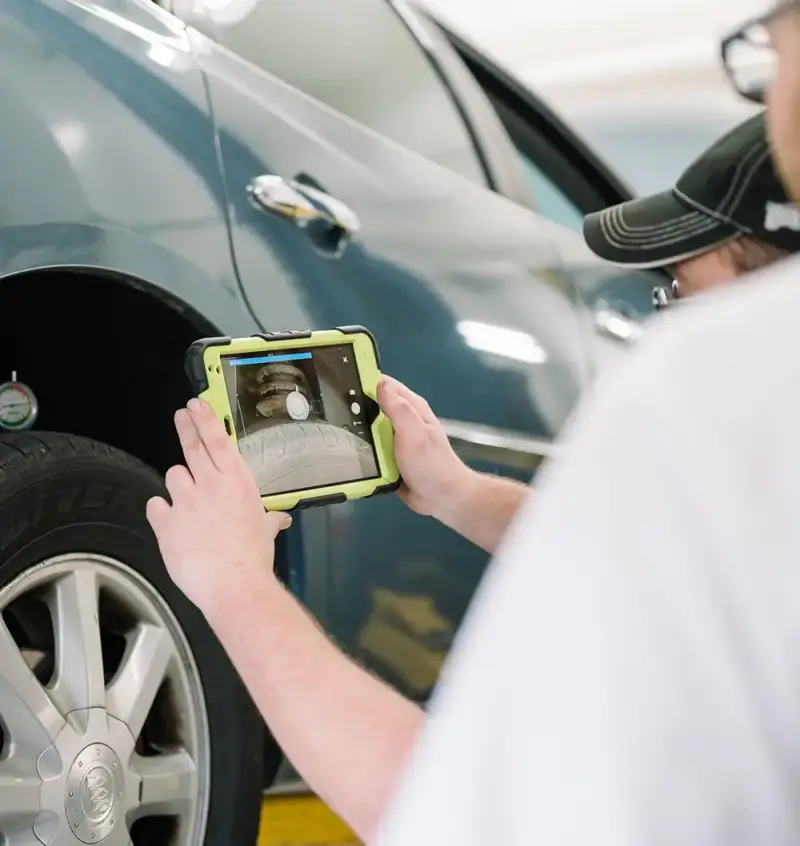
- You receive a digital vehicle inspection with photos and notes sent to your phone or email.
- You see the itemized written estimate and approve the work before any repair starts.
- Repairs are backed by our 36-month/36,000-mile warranty at both shops.
Get Your Check Engine Light Diagnosed in Dayton
If your check engine light is flashing — or came on steady and stayed on — call the shop closest to you. Both locations offer a complimentary customer shuttle, free vehicle pick-up and delivery, and loaner cars with qualifying repairs.
- Beavercreek: 937-426-2886 — 3815 Dayton-Xenia Rd
- Centerville: 937-433-0140 — 100 N Main St
- Hours: Monday–Friday, 7:30am–5:00pm
Schedule a diagnostic appointment online →
Frequently Asked Questions
Can I drive with a flashing check engine light?
No. A flashing check engine light means the engine is actively misfiring badly enough to send raw, unburned fuel into the exhaust and overheat the catalytic converter. Ease off the gas, pull over as soon as it is safe, shut the engine off, and have the vehicle towed to a repair shop.
What is the difference between a steady and a flashing check engine light?
A steady check engine light means the engine computer detected a fault that needs diagnosis soon, but if the car drives normally you can usually drive it to a shop. A flashing check engine light signals a severe active misfire that can cause expensive engine or catalytic converter damage within minutes.
What causes a check engine light to flash?
The most common causes are a failed ignition coil, worn spark plugs, a stuck or failing fuel injector, a major vacuum leak, low fuel pressure, or internal engine compression loss. Any fault that stops one or more cylinders from burning fuel cleanly can trigger a blinking light.
Does Murphy's Autocare read check engine light codes for free?
Yes. Check engine light code reading is on our always-free services list at both our Beavercreek and Centerville shops. Keep in mind that a code reading tells you which system set the fault, not which part failed; pinpointing the root cause and quoting the repair requires a full diagnostic inspection.
How much does it take to diagnose and fix a flashing check engine light?
It depends on what caused the misfire. A single bad ignition coil or spark plug is a straightforward repair, while fuel delivery or internal mechanical problems take more work. Murphy's runs a diagnostic inspection first, sends you photos and a written estimate, and backs repairs with a 36-month/36,000-mile warranty.
Stay connected with us!
